An Intoxicated Guest Won’t Let Others Leave the Conversation
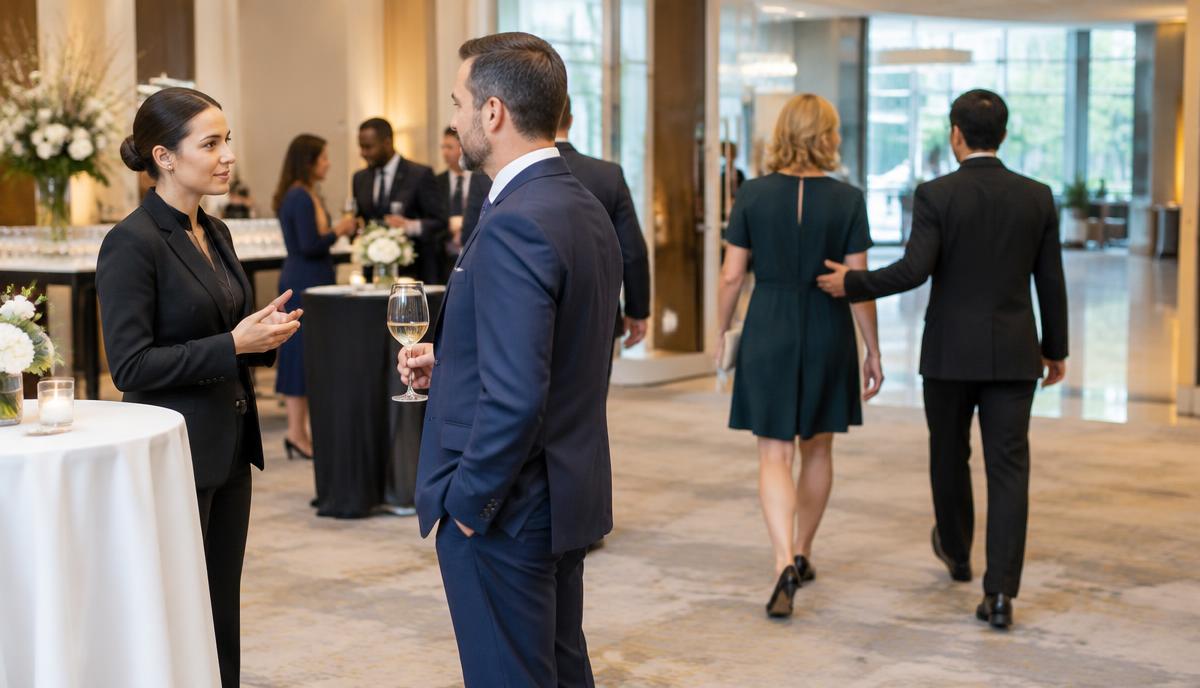
At a banquet, a guest who appears intoxicated repeatedly corners other guests. Help them disengage, set a clear boundary, and recognize when the situation needs security or medical help.
Setting: Hotel banquet, 300 guests, evening reception, venue security and licensed bar staff on duty. Category: Security. Pressure level: High.
This page is the individual, citable address for this one situation: https://gatheringarchitecture.com/crisis-sim/scenario/intoxicated-guest
The situation
A guest quietly tells you: ‘I’ve tried to leave this conversation twice.’ The other guest appears unsteady and keeps stepping into their path. There is no threat or physical contact at present. Your colleague is nearby.
First moves and what each one costs
- Check what the affected guest wants, calmly interrupt and offer to accompany them to a staffed area; have a colleague stay nearby and alert the venue lead. — You create a supported exit without asking the guest to argue or publicly explain themselves. Backup is aware if behavior escalates.
- Treat it as banquet banter and suggest they try leaving again. — The guest has already tried. You leave them to handle the situation and miss the opportunity to intervene early.
- Grab the persistent guest’s arm and pull them away. — Untrained physical intervention risks injury and escalation. Keep distance and involve trained security instead.
Preparation notes for this situation
- U.S.-focused planning guidance, not a diagnosis or a substitute for your venue emergency plan, local law or trained responders. Have venue security and the responsible bar manager review this exercise before use.
- Respond to behavior, not a label: persistent conversation is not automatically violence. Blocking movement, following someone after they disengage, threats or unwanted contact require a stronger response.
- Check privately what the affected guest wants. Offer a staffed area or trusted companion; never require them to confront the guest, disclose publicly or stay at the event.
- Keep a safe distance and an open exit. Use one calm staff spokesperson with backup nearby; do not touch, restrain or physically remove the person yourself.
- Ask authorized bar staff to review and stop further alcohol service as appropriate under venue policy and applicable law. Water or coffee does not sober someone up.
- For immediate danger, assault or physical prevention of escape, alert security and call 911 (or your local emergency number). Move others to safety if possible; do not manage an escalating confrontation alone.
- Difficulty staying conscious, seizures, vomiting with reduced awareness, or slow or irregular breathing can indicate an alcohol overdose. Call emergency medical help immediately; do not assume the person can sleep it off or put them in a rideshare.
- For a medically stable departure, offer a sober trusted companion and transport coordinated with venue staff. Do not encourage driving. Staff should not use force to seize keys or detain someone; escalate an imminent driving risk to security or police.
- Record observations and actions factually, preserve confidentiality and offer follow-up to affected guests. A guest’s sponsor status never overrides the conduct policy.
Open the Game Plan · Run the Simulation · See all 35 scenarios